Jurix - Redefining Legal Excellence
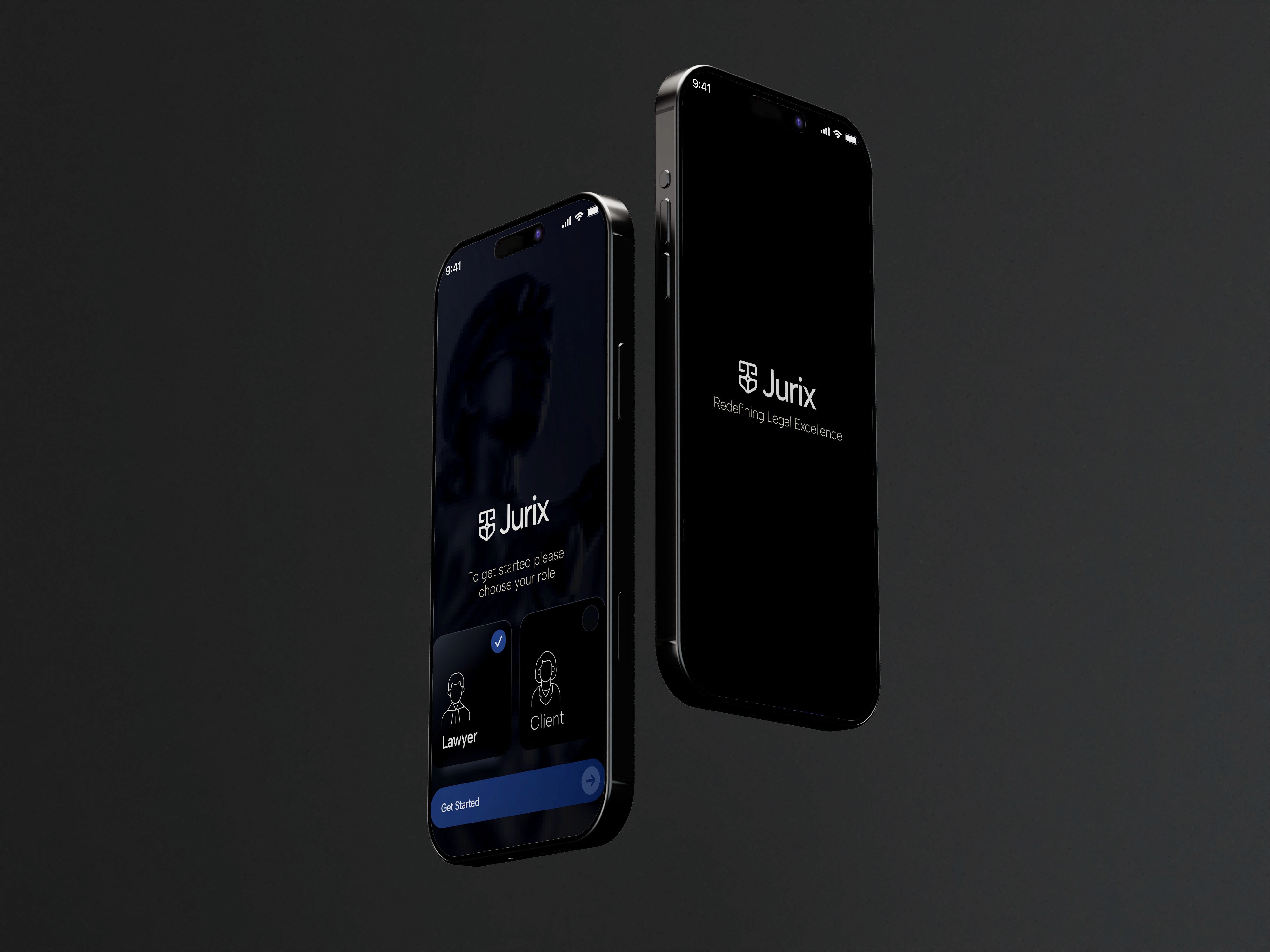
We transformed a fragmented and opaque legal landscape into a unified digital marketplace. By designing a coordinated system for seven distinct user roles, we bridged the gap between client anxiety and lawyer administrative fatigue through intentional system architecture.
Category:
Multi-User Flow Design & UX Strategy
Date:


The Friction: A Systemic Crisis of Trust and Data
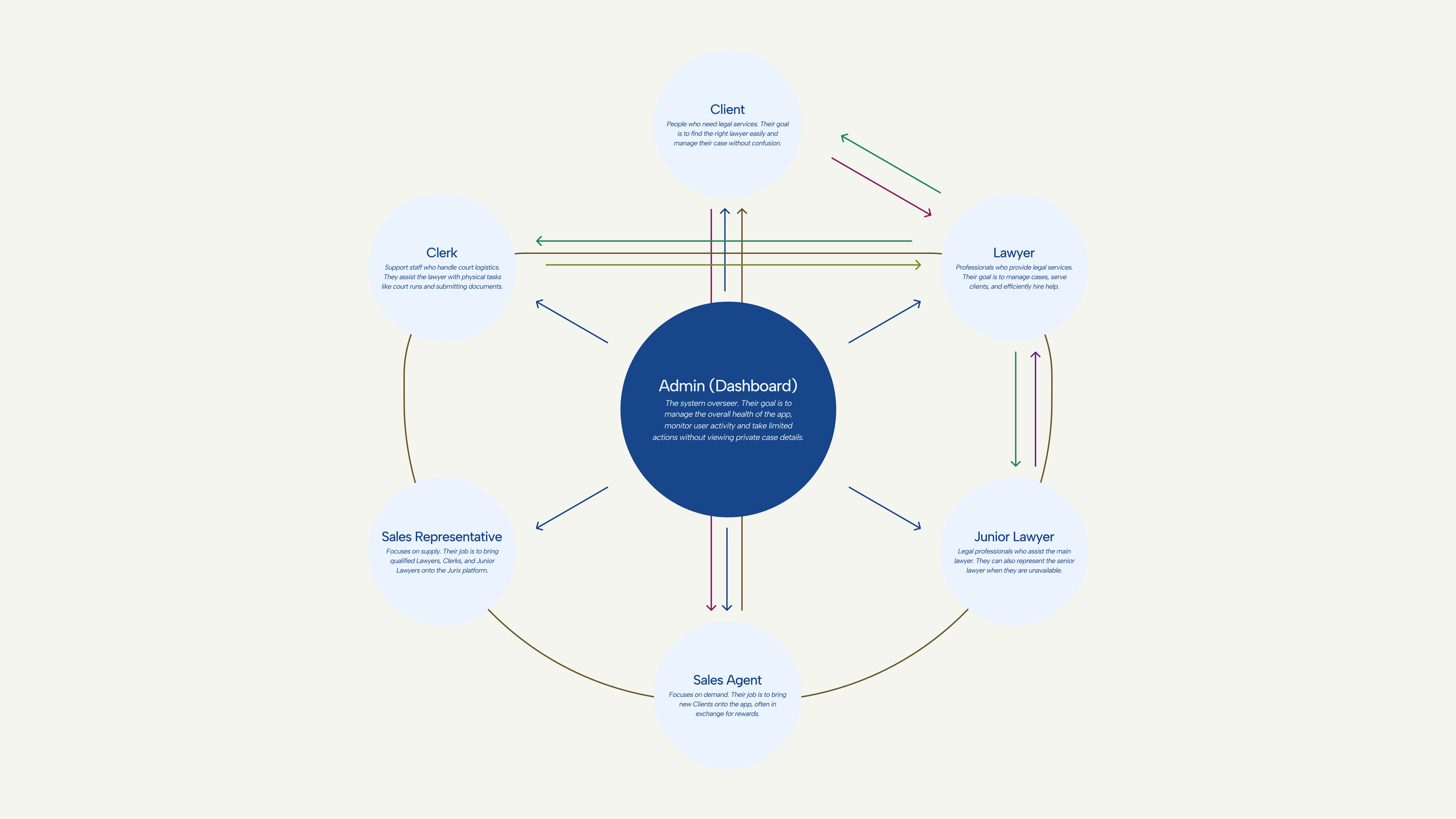
The legal industry operates within a black box that creates friction for everyone involved. For clients, entering the legal world is a high anxiety event defined by a complete lack of price transparency and intimidating entry points. They often feel powerless when searching for experts and struggle to track case progress. On the other side, lawyers are trapped in an administrative cycle where sixty percent of their productive hours are consumed by manual coordination and scattered data management. When we took over this project, it was a collection of disjointed UI screens without a central logic. We recognized that the challenge was not just visual but an architectural crisis. We had to coordinate seven different roles including Clients, Lawyers, Junior Lawyers, Clerks, Sales Agents, Sales Reps, and Admins into one fluid conversation. Our mission was to build a system that made this massive enterprise machine feel as effortless as a messaging app while maintaining strict legal compliance.

Strategic Pivot: From Directory to Guided Experience
Most legal tech products fail because they act as simple and static directories. Our research showed that legal clients are not just browsing but are looking for immediate peace of mind. To address this, we pivoted the entire entry strategy. We integrated Jurix AI as the primary front door of the experience. By offering instant and confidential guidance, we allowed users to clarify their needs before committing to a formal consultation fee. This build of trust was essential for converting high stress users into long term leads. We then applied a principle of complexity abstraction across the board. We ensured that each of the seven roles only encountered the data points strictly necessary for their specific task. For the client, this meant a guided onboarding flow that translated complex legal jargon into actionable choices. For the administrator, it meant a high level health dashboard that respected user privacy by gating case specific messages while still allowing for operational oversight.
Solution Pillar: Engineering the Lawyer Cockpit
We moved away from the idea of a simple dashboard and toward a high performance cockpit for legal professionals. Lawyers do not need more notifications but rather a system that helps them practice at the top of their license. We architected a centralized hub featuring an integrated Resource Library. This allowed practitioners to instantly access, customize, and share verified templates with clients in just two clicks. By trading manual logistics for systematized efficiency, we allowed senior lawyers to focus on high level strategy while delegating execution to junior lawyers and clerks within a monitored environment. We also realized that a standard service flow was not enough for the variety of legal work. We introduced a flexible bidding system that allowed for custom quotes and negotiations. This strategic pivot ensured that the platform could handle everything from simple fixed fee document drafting to high stakes litigation, effectively increasing the lawyer capacity to take on new cases without increasing their administrative burden.

The Invisible Decision: Protecting the Digital Economy
One of the most critical challenges in marketplace design is preventing platform leakage. In the legal world, once a connection is made, users often try to move their business offline to bypass service fees. We designed a secure guardrail system to solve this from a business logic perspective. All communication, file sharing, and financial transactions are strictly contained within the Jurix environment throughout the case lifecycle. Personal contact details remain hidden until a formal legal relationship is established and a payment intent is verified. We framed this as a privacy and security feature for the user, but it was a strategic business decision to ensure revenue capture. We also built an accountability loop into the system. If a lawyer fails to respond mid case, the client can trigger a follow up action. After three strikes, the system automatically removes the unresponsive lawyer and re-initiates the hiring process. This level of protection creates a sustainable and self regulating ecosystem where the platform remains the indispensable hub for every interaction.

Lessons Learned and the Future of Justice
This project reinforced our belief that simplification is a mathematical challenge rather than a visual one. We learned that you cannot truly simplify the law, but you can hide the complexity through a rigorous hierarchy of information. We achieved the profit goals of the business without compromising the transparency that users deserve. However, our work also highlighted the gaps that remain in the current version. We identified that the product is not yet optimized for multi-sequential case flows where a small service naturally leads into long term litigation. We also found that the financial flows need further refinement to eliminate loopholes in international transactions. Looking ahead, we want to evolve Jurix AI into a sophisticated assistant that supports lawyer strategy rather than just answering client queries. Our role was to lay the foundation for a sustainable digital economy that can scale to include thousands of legal experts, ultimately making the legal system more accessible and effective for millions of people worldwide.
